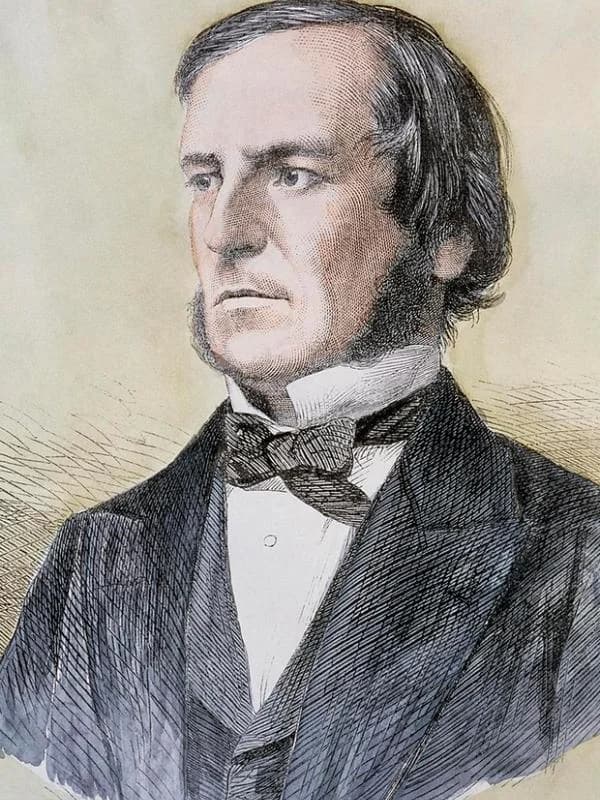
George Boole was an English autodidact, mathematician, philosopher and logician who served as the first
George Boole was an English mathematician, educator, philosopher and logician who lived in the 19th century. He worked in the fields of differential equations and algebraic logic, and is now best known as the author of "The Laws of Thought". This work contains Boolean algebra, which forms the basis of all modern computer arithmetic.
Known for his foundational work in symbolic logic and Boolean algebra. Boole's algebraic system of logic became the basis for digital logic circuits and laid the groundwork for modern computer science and digital electronics. His Boolean algebra is fundamental in the design and analysis of computer algorithms and circuits, forming the backbone of digital computation. Boole's pioneering contributions have had a lasting impact on the field of computer science and the development of information technology.
George Boole was an English autodidact, mathematician, philosopher and logician who served as the first professor of mathematics at Queen's College, Cork in Ireland. He worked in the fields of differential equations and algebraic logic, and is best known as the author of The Laws of Thought (1854), which contains Boolean algebra. Boolean logic, essential to computer programming, is credited with helping to lay the foundations for the Information Age.
The Mathematical Analysis of Logic
Other
The Laws of Thought
Other
Boolean function
Other
Boolean algebra
Other
Boole's rule
Other
Boole's inequality
Other
University College Cork
1849–1864
 Ancient & Medieval
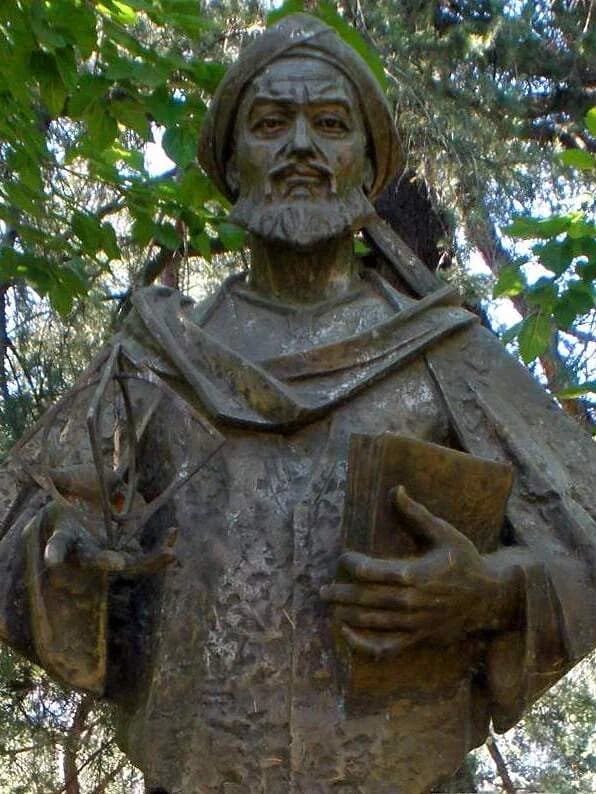
Al-Khwarizmi
Muhammad ibn Musa al-Khwarizmi, or simply al-Khwarizmi was a mathematician active during the Islamic Golden
 Ancient & Medieval
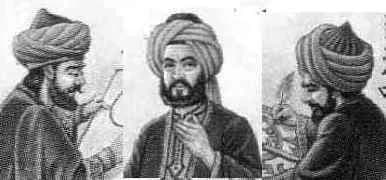
Banu Musa Brothers
Muhammad ibn Musa al-Khwarizmi, or simply al-Khwarizmi was a mathematician active during the Islamic Golden
 Ancient & Medieval
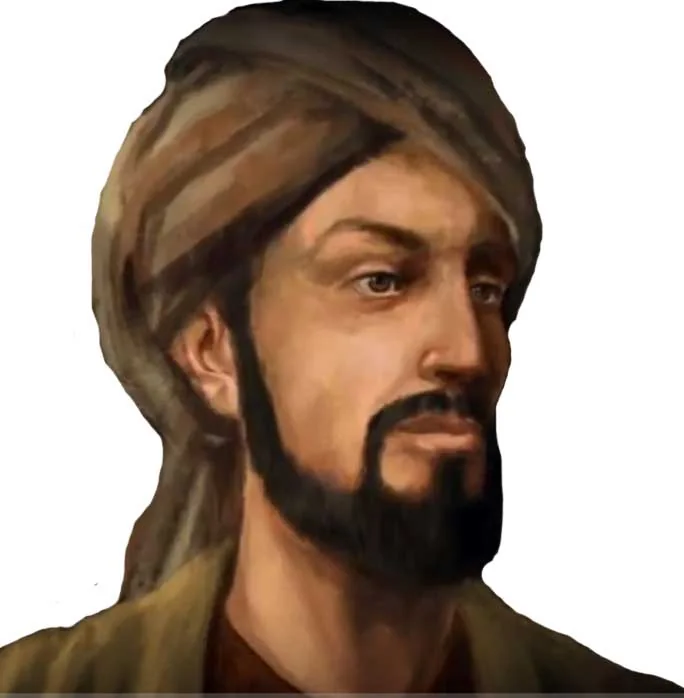
Al-Jazari
Badīʿ az-Zaman Abu l-ʿIzz ibn Ismāʿīl ibn ar-Razāz al-Jazarī was a polymath, scholar, inventor, mechanical
 Ancient & Medieval
Ramon Llull
Ramon Llull, sometimes anglicized as Raymond Lully, was a Catholic philosopher, theologian, poet, missionary, apologist